Sijia Liu
[introductory/advanced] From Safe Models to Safe AI Agents: Alignment from Centralized to Distributed Learning
Summary
As large language models (LLMs) evolve into collaborative multi-agent systems (MAS), AI safety alignment must move beyond individual models toward system-level coordination. This course begins with the foundations of individual-model safety alignment, highlighting key challenges in safety–utility trade-offs, robustness, and persistence. We then examine why individually aligned agents do not necessarily form safe multi-agent systems, as agent interactions and communication can introduce new safety risks. Building on this motivation, we explore how safety alignment can evolve from individual-model training to system-level collaborative optimization, comparing centralized and distributed approaches. In particular, we introduce an alternating direction method of multipliers (ADMM)-based distributed alignment framework that enables agents to learn locally while coordinating toward shared safety objectives without relying on a centralized trainer.
Syllabus
- Foundations of LLM safety alignment: Safety alignment, post-training/mid-training/pre-training, safety–utility trade-offs, constrained optimization, and robust safety training.
- From individual-model to multi-agent safety: Agent composition, interaction-induced safety risks, compromised agents, and system-level safety challenges.
- Centralized vs. distributed multi-agent safety alignment: Collaborative training, distributed optimization, ADMM-based role-local learning and consensus, and decentralized communication.
- Case studies: Safety transfer, robustness under compromised-agent settings, communication efficiency, and scalable trustworthy multi-agent systems.
References
Sijia Liu, Yuanshun Yao, Jinghan Jia, Stephen Casper, Nathalie Baracaldo, Peter Hase, Yuguang Yao et al. “Rethinking machine unlearning for large language models.” Nature Machine Intelligence, 7, no. 2 (2025): 181-194.
Yancheng Huang, Changsheng Wang, Chongyu Fan, Yicheng Lang, Bingqi Shang, Yang Zhang, Mingyi Hong, Qing Qu, Alvaro Velasquez, and Sijia Liu. “Subspace Control: Turning Constrained Model Steering into Controllable Spectral Optimization.” Third Conference on Language Modeling (COLM), 2026.
Stephen Boyd, Neal Parikh, Eric Chu, Borja Peleato, and Jonathan Eckstein. “Distributed Optimization and Statistical Learning via the Alternating Direction Method of Multipliers.” Foundations and Trends® in Machine Learning, 3, no. 1 (2011): 1-122.
Yiwei Chen, Changsheng Wang, Yicheng Lang, Qing Qu, Alfred O. Hero, Sijia Liu. “Train Locally, Learn Together: Distributed Multi-Agent Training via ADMM.” arXiv preprint, 2026.
Pin-Yu Chen, and Sijia Liu. Introduction to foundation models. Springer, 2025.
Pre-requisites
Basic knowledge of LLMs, safety alignment, and optimization. Familiarity with model training is helpful; prior experience with multi-agent systems or distributed learning is not required.
Short bio
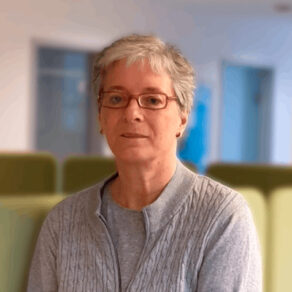
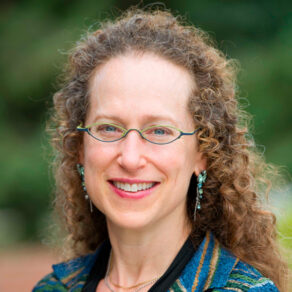
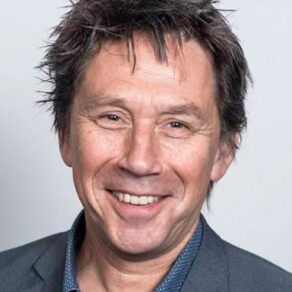
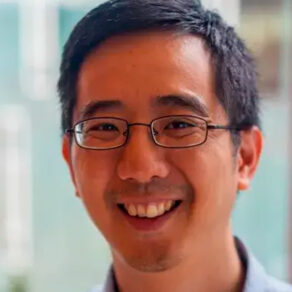
Sijia Liu is a Red Cedar Distinguished Associate Professor in the Department of Computer Science and Engineering at Michigan State University (MSU), where he directs the OPtimization and Trustworthy Machine Learning (OPTML) Lab. He is also an Affiliated Professor at the MIT-IBM Watson AI Lab, IBM Research. His research focuses on scalable and trustworthy AI, including foundation model safety, machine unlearning, adversarial robustness, and scalable optimization. His honors include the NSF CAREER Award (2024), INNS Aharon Katzir Young Investigator Award (2025), selection to the National Academy of Engineering’s U.S. Frontiers of Engineering Symposium (2026), and several industry faculty awards and best paper recognitions. He also co-founded the New Frontiers in Adversarial Machine Learning Workshop series (2021–2026).